 PalworldFans
Back in 2020, humanity got a collective reality check about its own mortality. The universal truth that we'll all kick the bucket someday suddenly felt less like a distant philosophical notion and more like a pesky neighbor who'd moved in way too close. Most folks, bless their hearts, barely think about what's for dinner next Tuesday, let alone what might happen in 30 years. But the pandemic? Oh, it shoved that future right into our present-day living rooms. Death transformed from a gentle whisper for a far-off, future version of ourselves into a loud, obnoxious possibility knocking at the door. Even if the stats said the young and healthy were relatively safe, it sure didn't feel that way when the news was a 24/7 horror show and your biggest outing was to the grocery store armed with enough hand sanitizer to fill a kiddie pool. This shared global anxiety didn't just change us; it quietly rewired our entertainment, giving the survival game genre a shot of adrenaline straight to the heart.

Since those locked-down days, the survival genre has absolutely exploded. We're not just talking a few hits; we're talking viral sensations that took over the internet. Think about the heavyweight champs that came out of nowhere:
-
Valheim: Vikings, mead, and building epic longhouses. A sleeper hit that proved co-op survival could be magical.
-
Sons of the Forest: Because who doesn't want to be terrified by mutant cannibals while trying to build a cozy cabin?
-
Palworld: The game that broke the internet by asking, "What if Pokémon, but with guns and forced labor?"
And that's just the tip of the iceberg! The genre is buzzing with life:
-
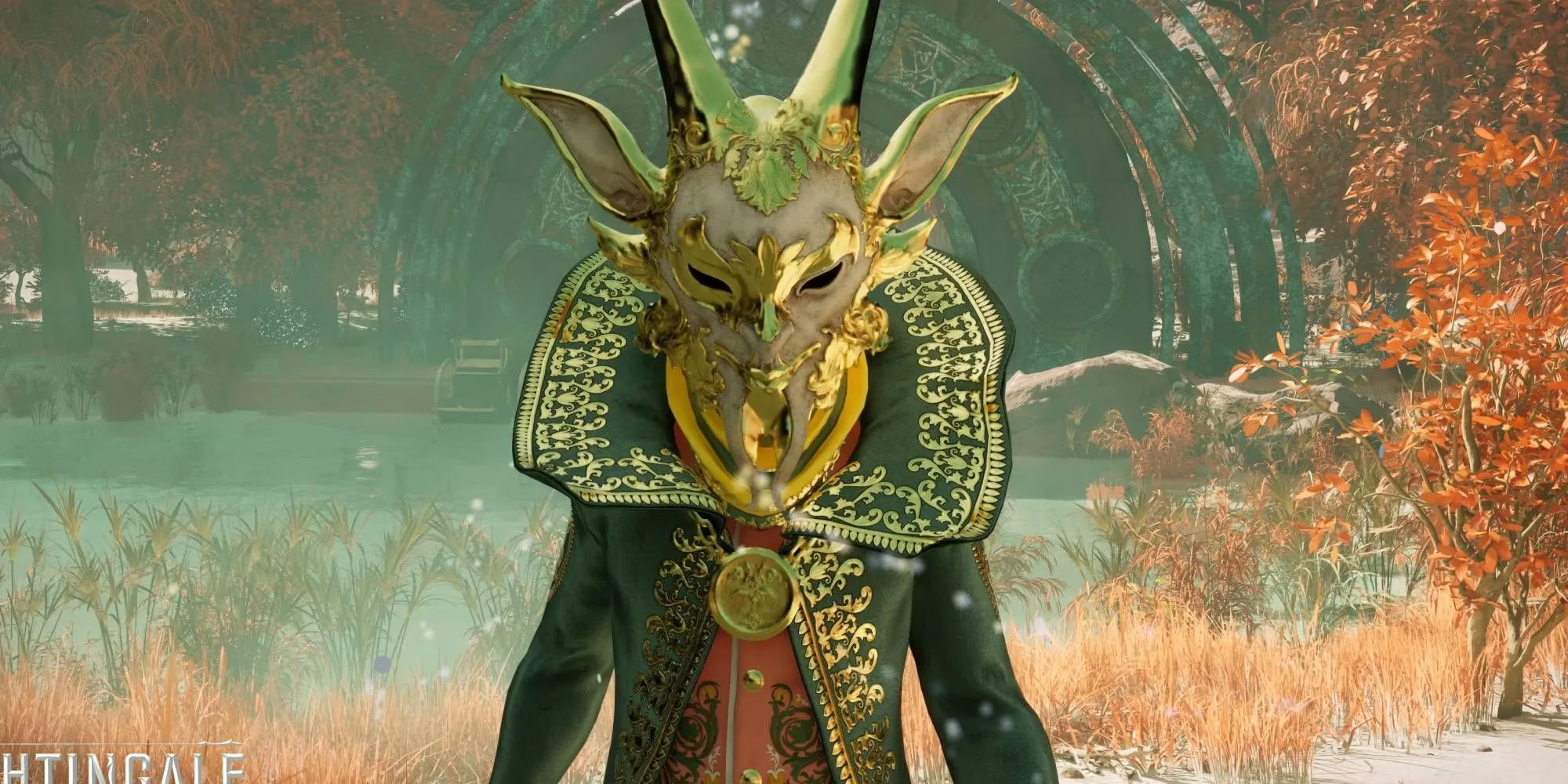
The New Kids on the Block: Nightingale with its gaslamp fantasy and Pacific Drive with its spooky, car-centric survival.
-
The Recent Success Stories: Enshrouded blending RPG depth with survival crafting.
-
The Established Favorites: V Rising (gothic vampire lord simulator), Raft (floating on hope and plastic), and Grounded (Honey, I Shrunk the Kids, but terrifying).
It's the golden age of "gather, craft, don't die." And you gotta wonder, is this just a coincidence, or is there a little pandemic-shaped ghost haunting our gaming preferences?
The Relatable Routine of Not Dying
Survival games, at their core, are all about managing the basics we usually take for granted. Your character gets hungry, thirsty, tired, or sick—sound familiar? During lockdown, our own basic routines were thrown into chaos. Suddenly, getting groceries felt like a tactical mission, and human interaction was a health risk calculation. Survival games provide a strange, pixelated reflection of that. They give you a purpose through routine: chop wood, build shelter, find food, repeat. It starts small, but these little goals snowball into massive projects. For a world that felt utterly aimless—stuck inside with nowhere to go and no one to see—these games offered a structured, rewarding loop. It wasn't just mindless repetition; it was cathartic. There's a weird comfort in building your own safe haven, one virtual log at a time, when the real world felt anything but secure.
Punching Trees: The Catharsis of Directionless Rage
Let's talk about the elephant in the room: the rage. The pandemic wasn't just anxiety and boredom; it was a deep, simmering frustration. A brilliant piece of art that captures this perfectly is Sam Fender's song Howdon Aldi Death Queue. Fender, who was on the vulnerable list, channels the sheer anger of facing death from something as mundane as buying bread. Survival games, whether they mean to or not, tap directly into this vein.
Think about it. The first thing you do in most of these games? You punch a tree. Or smash a rock. You take out all that pent-up, directionless frustration on the digital environment. A tree isn't fighting back. It's the perfect, silent outlet. Sure, you need the wood to survive, but the act of violently acquiring it... well, it feels good, doesn't it? It's a necessary violence with a satisfying crunch. Nearly four years on from the peak of lockdown, that white-hot rage has cooled, but the satisfaction of methodically dismantling nature to build your own world remains. It's a different kind of challenge than facing down a brutal boss in Elden Ring; it's a primal, productive release.
The Post-Pandemic Gaming Landscape
So, what's the deal? Are these games just riding a wave, each one copying the last for a slice of the pie? Maybe. But it's fascinating that the first major, defining trend of the post-pandemic gaming era isn't hyper-realistic shooters or massive MMOs—it's these lo-fi, viral, survival-crafting experiences. The pandemic changed us in a million subtle ways we're still figuring out. For all the chaos and tragedy, it inadvertently created the perfect petri dish for the humble survival game to mutate and thrive. These games let us practice control in a world that felt out of control, find purpose in a time of aimlessness, and safely vent frustrations we didn't even know we still had. They're more than just games; they're a digital coping mechanism, a testament to how our collective trauma reshapes the stories we tell and the worlds we choose to escape into. And honestly? That's pretty wild to think about while you're just trying to build a nicer cabin for your captured Pals.