 PalworldFans
The gaming world was hit with a seismic legal tremor in late 2024 when Nintendo, alongside The Pokémon Company, decided to unleash a lawsuit upon the creators of the smash-hit creature-collection survival game, Palworld. The target? Pocketpair, the indie developer that dared to mix Pokémon-esque creature capturing with guns, factory labor, and a dash of existential dread. Filed in the Tokyo District Court, this wasn't your run-of-the-mill copyright gripe about a Pikachu lookalike with an assault rifle; this was a full-blown patent infringement lawsuit. Nintendo was suing for damages, claiming Palworld had stepped on multiple patented toes, though the exact nature of those patents remained shrouded in mystery, leaving even Pocketpair scratching its head the next day. For many, it was a "we told you so" moment that had been brewing since Palworld's explosive launch, but the timing? Oh, the timing was exquisitely, catastrophically bad.
Let's rewind for a second. Palworld burst onto the scene in January 2024, an Early Access darling that sold like hotcakes infused with monster-catching magic. We're talking over 25 million players across Steam and Xbox in its first month alone—numbers that would make any publisher weep with joy. By the summer of 2024, it had launched its massive Sakurajima update, complete with a PvP arena, new Pals (the game's creatures), and a whole new island to explore. The momentum was unreal for a game still technically in its larval stage. Then, just as Pocketpair was gearing up for its next big evolution, Nintendo's legal team served papers. It was like showing up to a party with a cease-and-desist order instead of a bottle of wine.
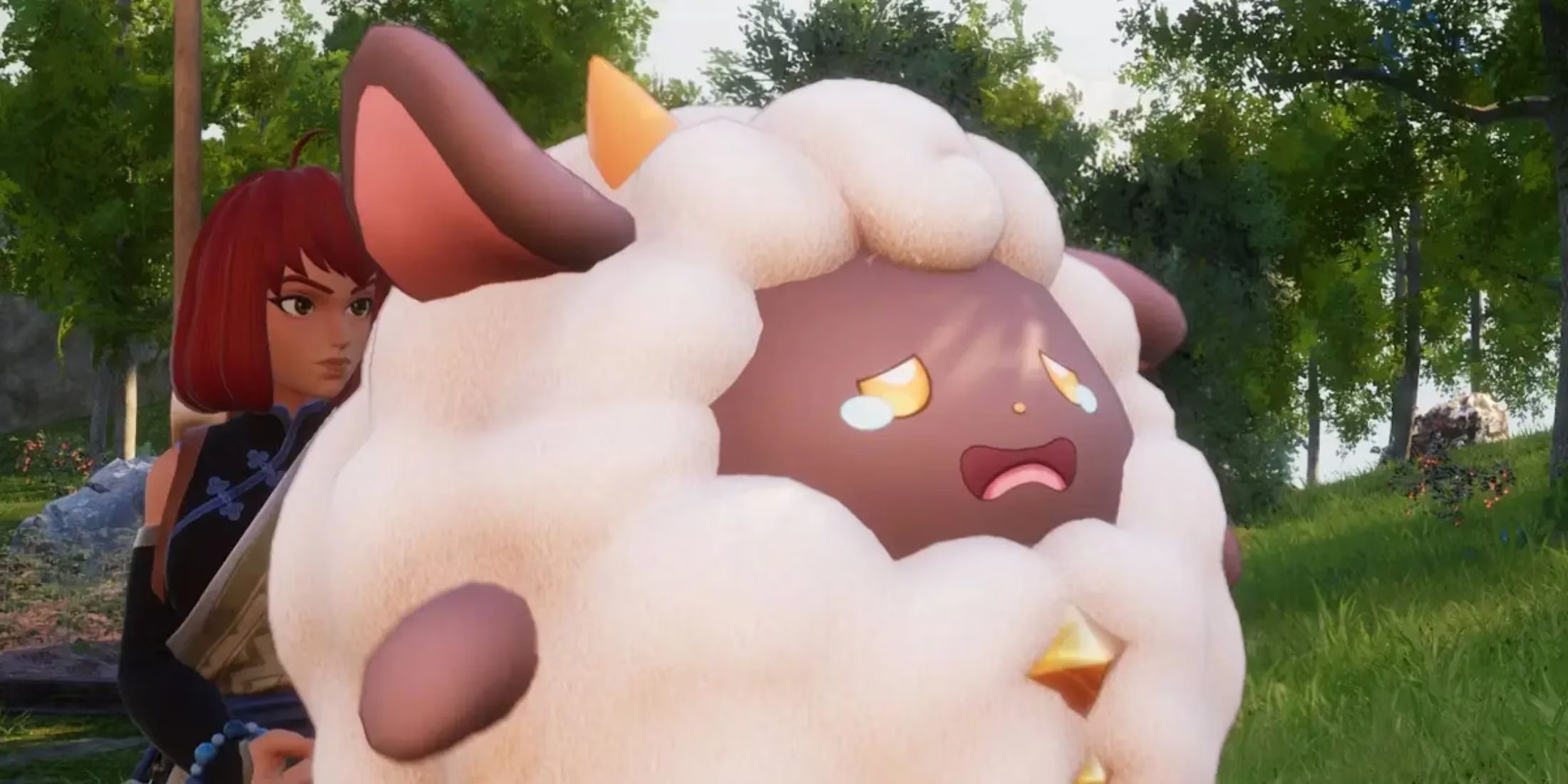
Now, to clear the air of confusion: this is a patent case, not a copyright case. That's a crucial distinction. It's less about whether Palworld's "Lamball" is a dead ringer for Wooloo, and more about the underlying systems, mechanics, and design decisions that make the game tick. Think of it like this: copyright protects the specific painting of a monster; a patent could protect the unique brush and technique used to paint any monster in a certain way. Nintendo, like other gaming giants, has a vault full of broad patents covering everything from in-game trading systems to how creatures might be stored in a digital ball. It's entirely possible Pocketpair wandered into a patented minefield without even knowing it was trespassing.
So, what's the likely fallout? A quick look at the legal landscape, especially in Japan where courts tend to take a stricter view on patents than their U.S. counterparts, suggests a probable outcome:
| Scenario | Likelihood | Impact on Palworld |
|---|---|---|
| Pocketpair Pays a Fine | High 🟡 | A financial hit, but the game lives on. |
| Forced Gameplay Adjustments | Medium 🟠 | Certain mechanics might need a rework. |
| Game Removal from Stores | Very Low 🔴 | The nuclear option; highly unlikely given Palworld's success. |
| Pocketpair Declares Bankruptcy | Extremely Low ⚫ | Palworld printed money; they have "funds to burn." |
The best-case scenario for fans is a settlement where Pocketpair writes a hefty check to Nintendo and makes some under-the-hood tweaks. The game's massive financial success means the studio likely has the resources to weather this storm. The worst immediate problem isn't bankruptcy; it's the potential for development chaos and delayed plans.
And boy, did those plans get a wrench thrown in them. The lawsuit landed just as the gaming rumor mill was churning at maximum capacity for the Tokyo Game Show (TGS) 2024. Whispers were everywhere: Palworld was finally going to announce its long-awaited launch on PlayStation! A PlayStation State of Play event was rumored for that same week, providing the perfect spotlight. Nintendo's legal filing, a week before TGS, threatened to turn that triumphant announcement into a last-minute, awkward silence. 😬
This timing issue created a cascade of potential headaches:
-
Lost Platform Momentum: A PlayStation launch would have been a massive win, opening Palworld to a huge new player base.
-
Version 1.0 Delay: PlayStation famously doesn't do Early Access games. A PS5 port announcement would have strongly hinted that Palworld's full 1.0 release was imminent. Delay the announcement, and you might delay the entire final game.
-
Partnership Awkwardness: To add another layer of drama, Pocketpair was in the process of forming Palworld Entertainment, Inc. with subsidiaries of Sony—PlayStation's parent company! Talk about an awkward board meeting.
Of course, there is precedent. The Pokémon-inspired MMO TemTem launched on PlayStation in 2020 while still in Early Access, so Sony has made exceptions before. And Palworld, being a commercial juggernaut, could certainly warrant "special treatment." But Nintendo's lawsuit cast a long, uncertain shadow over everything.
Fast forward to 2026, and we can look back with a bit more clarity. The TGS week of 2024 did, in fact, come and go without a PlayStation announcement for Palworld. The legal proceedings created a significant delay, forcing Pocketpair to focus on legal defense and potential game adjustments rather than expansion. While the game continued to receive updates on Steam and Xbox, the dream of a swift, multi-platform 1.0 launch evaporated. The lawsuit became a defining chapter in Palworld's story—a tale of indie ambition colliding with corporate patent portfolios. It served as a stark reminder to the entire industry: you can build a better monster-catching mousetrap, but you'd better make sure you didn't accidentally use Nintendo's patented blueprints for the spring mechanism. In the end, Palworld survived, but it had to navigate a legal gauntlet that temporarily caged its growth, proving that in the game of patents, even the most successful upstarts can find themselves on the receiving end of a super-effective legal move.