 PalworldFans
In the ever-expanding sea of survival crafting games, few titles have made waves as significant as Palworld. Since its explosive launch, this vibrant monster-catching adventure has captivated millions, not merely by following the established formulas of its predecessors like Minecraft or ARK: Survival Evolved, but by weaving them into something uniquely compelling. At first glance, the comparisons to a certain global monster-collecting phenomenon are inevitable—the adorable creatures, the act of catching them with spherical devices. Yet, to label Palworld as just another imitator is to miss its revolutionary heart. This is a game less about becoming a champion through battle and more about becoming a leader through community, where the true joy lies in managing a bustling, interdependent society of charmingly designed Pals.

The initial hours are familiar to any survival genre veteran: a lone human on an island, armed with flimsy stone tools, chopping wood and mining ore to scrape together a basic existence. The transformative moment arrives not with a dramatic boss fight, but with the first Pal assigned to a task. Suddenly, the solitary struggle evaporates. You are no longer a castaway but a foreman, an architect, a community leader. The game's genius is in its specialization. Each of the 137 Pals in the Paldeck isn't just a combatant; they are workers with innate skills. An Eikthyrdeer becomes a master lumberjack, its majestic antlers felling trees with efficiency. A woolly Lamball becomes a dedicated transporter, hauling resources with surprising determination. A grumpy little Fuack waddles over to tend the berry fields, ensuring the colony is fed.
This shift in perspective changes everything. The core gameplay loop ceases to be about catching them all for the sake of a completed checklist. Instead, exploration and capture become purposeful recruitment drives. When encountering a new Pal, the first question isn't "How strong is it?" but "What can it do?" Can this fiery fox, Arsox, man the forge to smelt metal? Can that winged Vanwyrm provide aerial transport to reach distant cliffs? The Paldeck transforms from a digital trophy case into an employee directory, each entry a potential cog in the ever-improving machine of your base. Watching a once-empty plot of land evolve into a humming, automated settlement—powered by the cheerful (if occasionally clumsy) labor of your monstrous friends—provides a profound sense of accomplishment that pure combat or collection rarely matches.
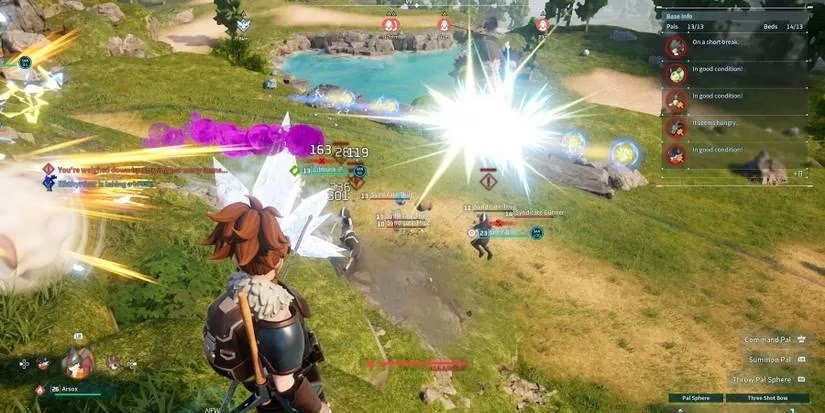
Of course, no society runs on work alone. Palworld masterfully fosters emotional bonds through shared moments of respite. The hot spring, once unlocked, becomes a sanctuary. There's an inexplicable warmth in pausing your construction projects to watch your weary workforce—the mighty Gorirat, the diligent Tanzee, the perpetually tired-looking Depresso—all soak away their fatigue in the steamy waters. It’s a moment of pure, vicarious relaxation. You provide for them, and in turn, their well-being becomes your concern. This emotional connection is tested in subtle, powerful ways. Returning from a resource run to a notification that your hardworking Tanzee has sprained its ankle triggers a genuine pang of worry. The game compels you to drop everything, craft medicine, and ensure your companion is healed. This isn't about optimizing efficiency; it's about care. The line between manager and caregiver beautifully blurs, creating an attachment deeper than any stat screen could convey.
Naturally, the path to utopia isn't perfectly smooth. Pals, for all their charm, can exhibit baffling AI. You'll find them stuck on rooftops, lodged between trees, or simply staring into the middle distance when there's work to be done. Yet, even these frustrations feel oddly endearing, like dealing with the quirks of a beloved pet. They reinforce the reality of your community—it’s alive, imperfect, and wonderfully yours.
As of 2026, Palworld's legacy is secure. It demonstrated that the monster-catching genre could mature, moving beyond childhood fantasies of battle leagues to explore themes of stewardship, industry, and communal living. The game asks a different question: What do you do with the creatures you befriend? Its answer—build a home, a society, a life together—resonated with a profound simplicity. It’s a game where the greatest reward isn't a championship belt, but the sight of your unique, hard-working family thriving in a world you built side-by-side.
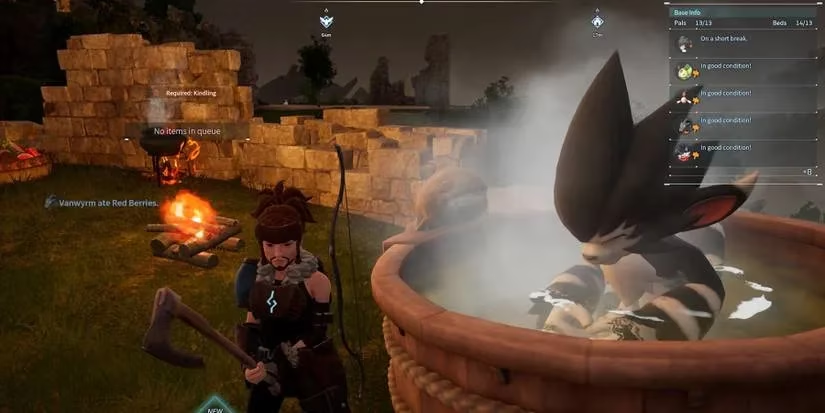
Ultimately, Palworld's triumph is its redefinition of value. In this vibrant world, a Pal's worth is multifaceted:
-
Labor Value: Determined by its Work Suitabilities (e.g., Kindling, Handiwork, Transport).
-
Combat Utility: Its role in defending the base or exploring dangerous territories.
-
Logistical Role: How it fits into the base's production chain and resource flow.
-
Emotional Value: The unique bond formed through shared work and relaxation.
This layered approach makes every capture meaningful. You're not just filling a slot; you're interviewing a candidate for a vital role in your growing enterprise. The game cleverly inverts the traditional power fantasy. You start as the weakest being on the island, reliant on primitive tools. Your ascent to power comes not from leveling up yourself, but from empowering others—organizing, delegating, and caring for the Pals who make your vision possible. It’s a leadership simulator disguised as a monster-collecting adventure, and its lasting appeal lies in the quiet, satisfying rhythm of a community at work, and the deep, unexpected care one feels for the digital creatures that make it all happen.