 PalworldFans
Let me tell you, fellow gamers, I’ve been through digital droughts and microtransaction floods, but nothing—NOTHING—prepared me for the sheer audacity of what I’ve witnessed since January 2024. One moment I was quietly breeding perfect IV Pikachu clones, the next I was staring at a screen showing a fluffy Lamball working an industrial assembly line with dead, soulless eyes. That was the day Palworld detonated across the Steam charts like a nuclear meme, and I knew the world had changed forever.
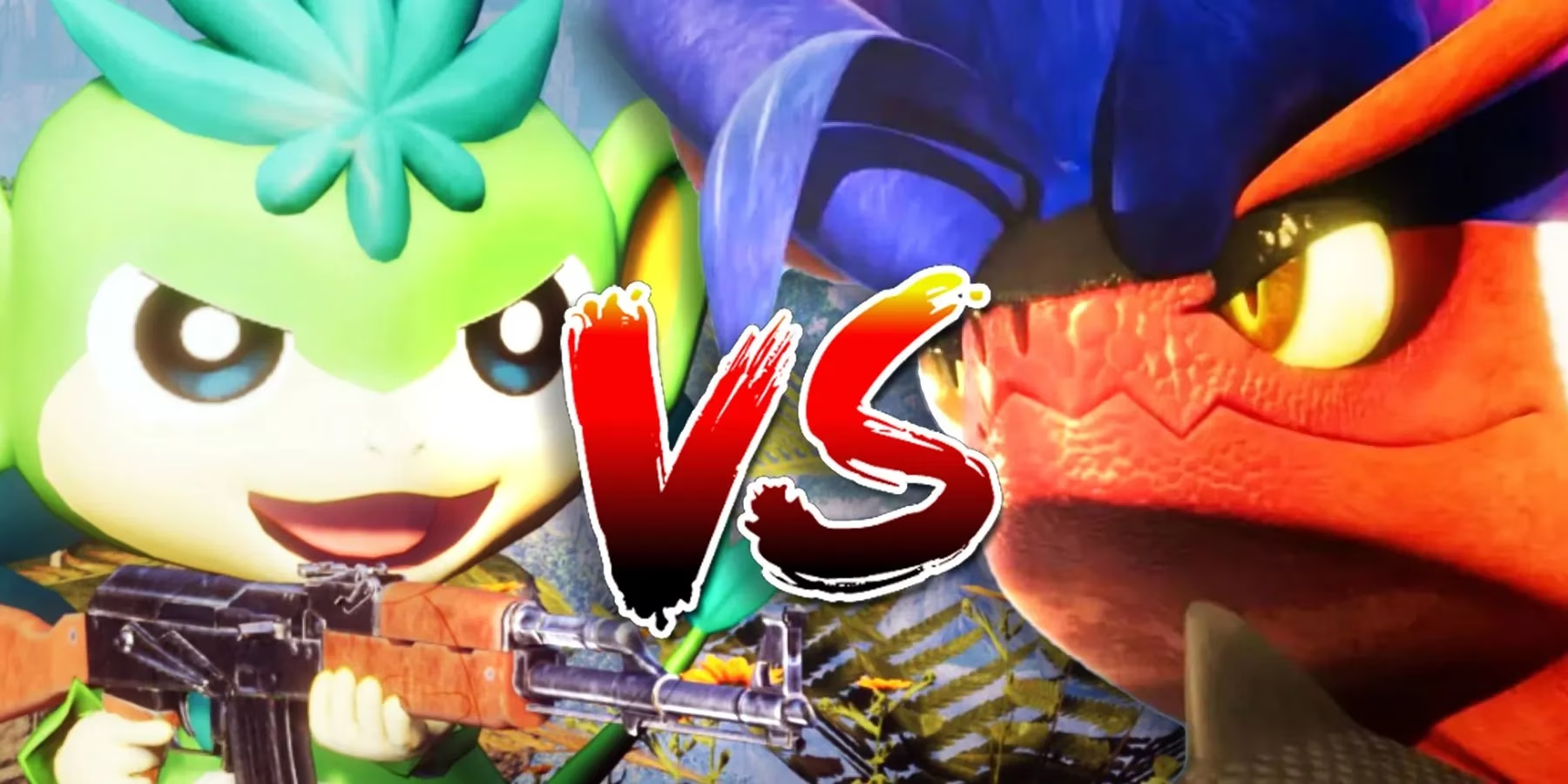
Fast forward to 2026, and I’m still trying to process the carnage. Palworld isn’t just a "breakout hit" anymore—it’s an indomitable global plague that has permanently scarred the landscape of creature-collecting games. Back in the ancient history of February 2024, when the game was a toddler in Early Access, it already surpassed the concurrent player counts of Counter-Strike 2, Cyberpunk 2077, and Elden Ring, claiming the second-highest peak in Steam’s entire existence. I remember laughing maniacally as the servers groaned under 2.1 million simultaneous survivors. It felt like the entire planet had collectively decided that it needed to see a penguin creature get obliterated by a rocket launcher instead of going to work.
But oh, the salt! The controversy! The delicious, endless forum battles! The similarities between Pals and Pokémon were so blatant that even my grandma, who thinks a Nintendo Switch is a light switch, could see it. The Pokémon Company itself, a monolithic deity of the entertainment industry, broke its stoic silence in early 2024. They issued a statement so icy it could freeze a Mammorest, declaring they had granted zero permissions for Pokémon IP and were "investigating" copyright infringement. For a franchise that has grossed a mind-bending $150 billion in its lifetime, to publicly acknowledge an indie game felt like watching Godzilla flinch at a particularly aggressive lizard. I was exhilarated. The David vs. Goliath narrative was nice, but the sales spreadsheets were a bloodbath.
Let me take you back to the chaotic launch window. Pokémon Scarlet and Violet, the supposed "Goliath," kicked off with a seismic 10 million copies sold in its first three days back in 2022. Compare that to Palworld’s "mere" 5 million in the same timeframe. The Nintendo loyalists crowed that the king was safe. Ha! They were watching the wrong graph. Palworld was a rocket while Scarlet and Violet, bless their bug-ridden, frame-dropping hearts, were a bicycle with a flat tire.
By September 2023, nearly a year after release, Pokémon’s Gen 9 titles had crawled to a respectable 23.23 million units. Then my little survival-crafting anarchist friend happened. In just a few weeks during early 2024, Palworld exploded to a staggering 19 million copies sold—closing the gap like a Jetragon on steroids. People wailed about the unfair advantage: "Palworld is on PC and Game Pass while Pokémon is trapped on Switch!" To which I say: EXACTLY. Palworld weaponized accessibility and watched the sales velocity leave the world’s highest-grossing media franchise in the pixelated dust.
Now, here in the glorious year 2026, the numbers have transcended earthly comparisons. Palworld’s full 1.0 release in late 2024 turned the global install base into an apocalyptic snowball. It’s not just outselling individual Pokémon games anymore; it has consumed entire subgenres. The last official count I saw, before the internet melted from excitement, placed Palworld’s total unit sales beyond 50 million, with Steam and Xbox ecosystems huffing to keep up with demand. I have literal NFTs of my Cattiva that are worthless now, but I don’t care. The game that started with a controversial trailer now boasts a Pal-dex that has expanded to nearly 200 critters, each more unsettlingly employable than the last.
What truly fries my circuits is how the playing field has inverted. The Pokémon Company, in a desperate bid to catch the lightning in a bottle they ignored for decades, tried to launch their own open-world survival spin-off in late 2025. Pokémon: Azure Trails felt like a soulless corporate algorithm trying to mimic the magic of Palworld’s janky gunplay. It sold fine—the brand is a money-printing Hydreigon—but it lacked the chaotic soul of an Anubis slaving away in a sulfuric acid mine. Meanwhile, Pocketpair, the developers, are now riding a throne made of leftover Palworld merchandise. They’ve become the indie dev team that taught the $150-billion gorilla a lesson in listening to what players actually want.
And me? I’m just a simple gamer who has watched my Chikipi hard-boiled egg empire subsidize multiple real-world vacations thanks to the in-game economy. The Pal vs. Pokémon war is over. The lamb of the underworld has won. I’ve seen things you people wouldn’t believe: flaming Tanzee soldiers storming a black marketeer’s tower without a single legal notice in sight. All these moments will be lost in time, like tears in rain… unless, of course, I reload my save file and do it all over again tomorrow. The age of Pokémon is over. The age of Palworld is forever. And I, for one, welcome our new overlords who can do my factory work for me.